Materials library

Materials that protect. Finishes that stand out.

Explore the surfaces, structures, and finishing details behind custom packaging. See what each option adds, where it works, and what to consider before you choose.

Packaging materials and finish details
Material library

Start with what the package needs to do.

Compare the print surface, structure, and feel. A retail carton, corrugated mailer, rigid presentation box, and flexible pouch each need a different material approach.

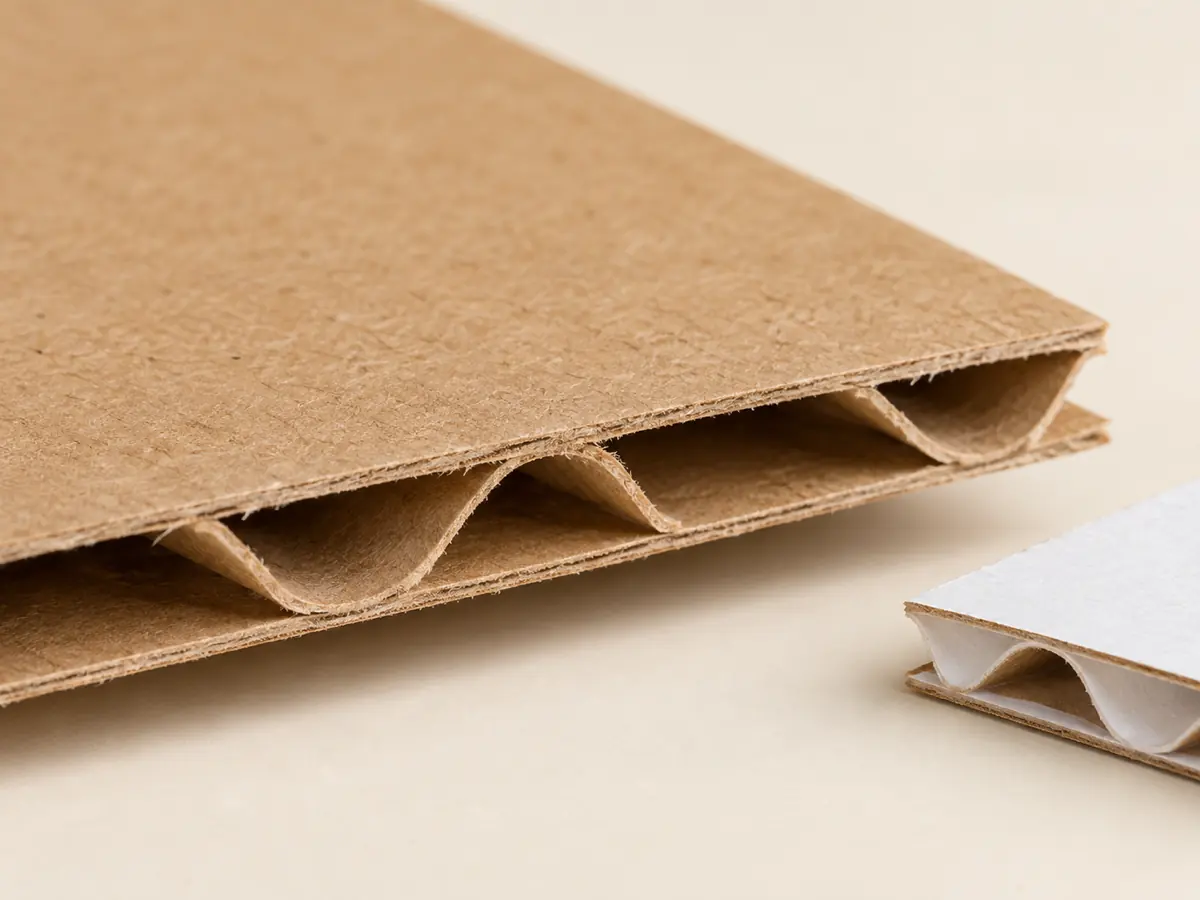
Single-wall corrugated board edge showing two flat liners and a fluted center

Protection & presentation

Corrugated board

A fluted paper layer between flat liners gives a mailer its depth and structure. Choose the board construction and the printed surface together.

Common uses: Ear-lock mailer boxes, subscription packaging, PR kits, and fitted corrugated inserts.

Print & selection notes

Kraft liners give a natural brown base. White liners or a printed sheet laminated to the board can support a brighter graphic finish.

E flute is a common starting point for compact printed mailers. Product weight, insert fit, box size, stacking, and transit determine the final board specification; flute size alone is not a load rating.
Explore custom mailer boxes →
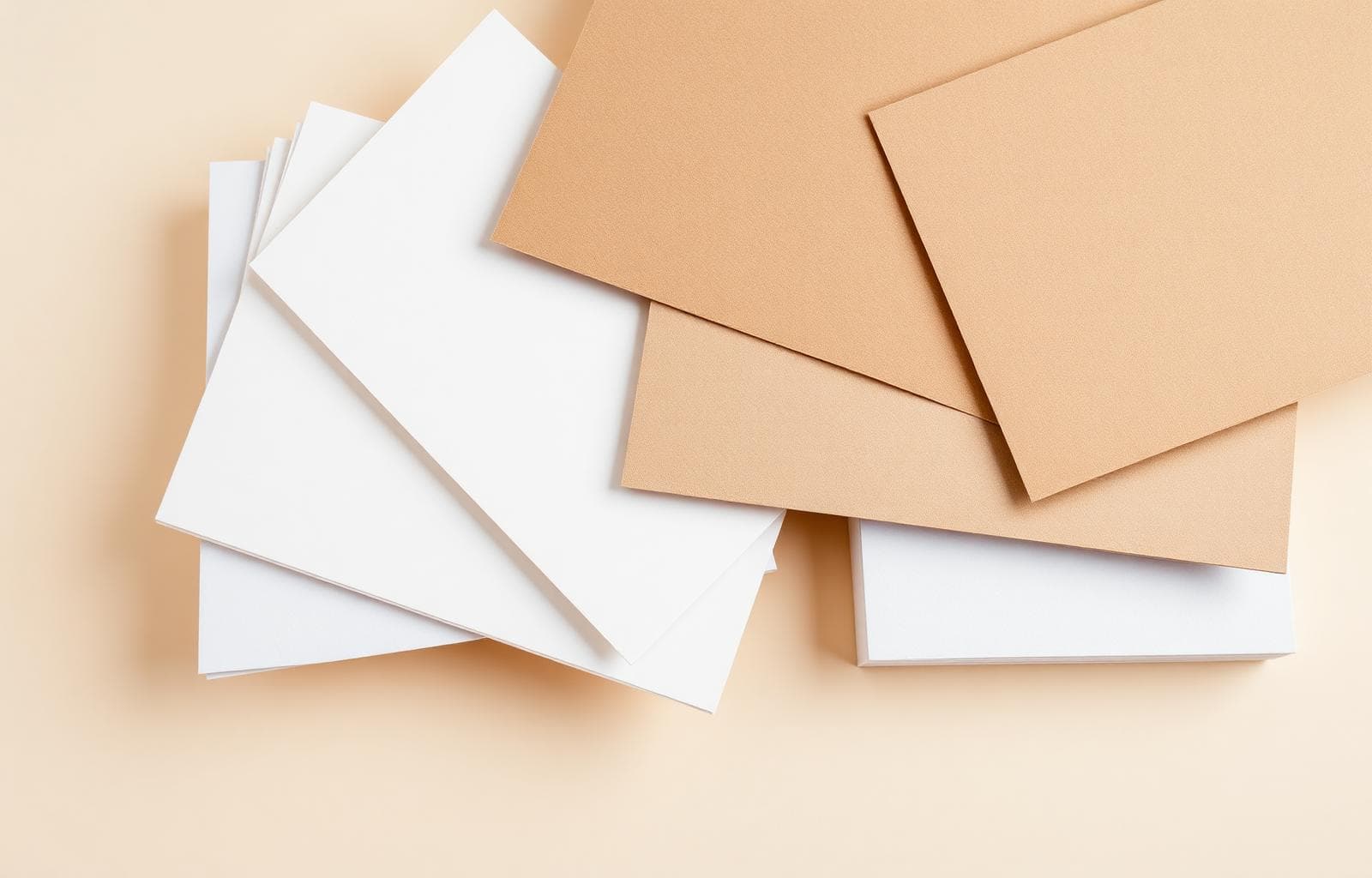
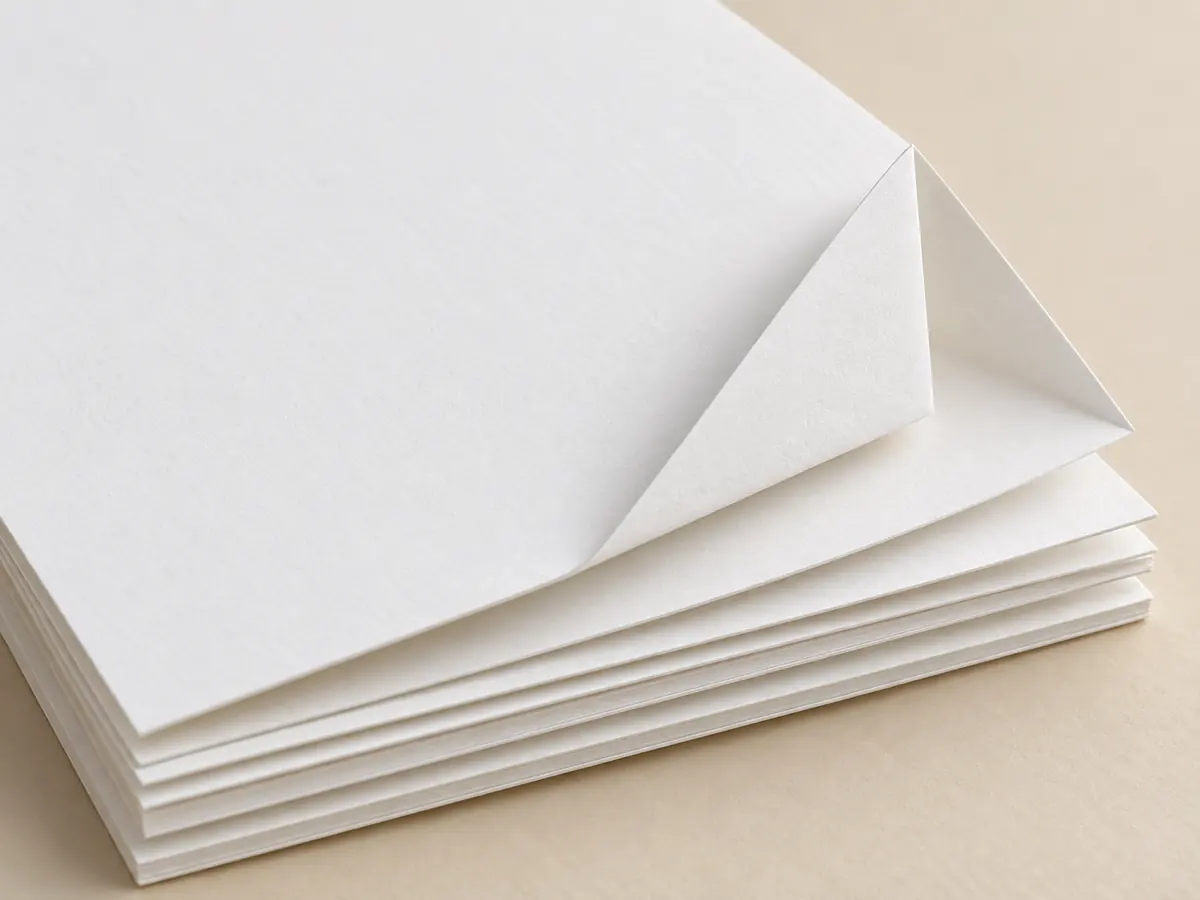
Smooth white folding paperboard sheets with a lifted corner showing the white reverse

Clean color & fine detail

White paperboard · C1S & C2S

Solid bleached sulfate (SBS) paperboard gives folding cartons a bright white base. C1S means coated on one side; C2S means coated on both sides.

Common uses: Beauty, supplement, small electronics, and other retail product cartons where clear graphics matter.

Print & selection notes

Choose C1S for a coated exterior with an uncoated reverse. Consider C2S when both faces need a coated print surface. An uncoated inside can also be printed, with a different result.

16 PT and 18 PT are common carton discussion points, with lighter and heavier options below. Coated board is not the same as a finished gloss or laminated box.

Explore custom folding cartons →
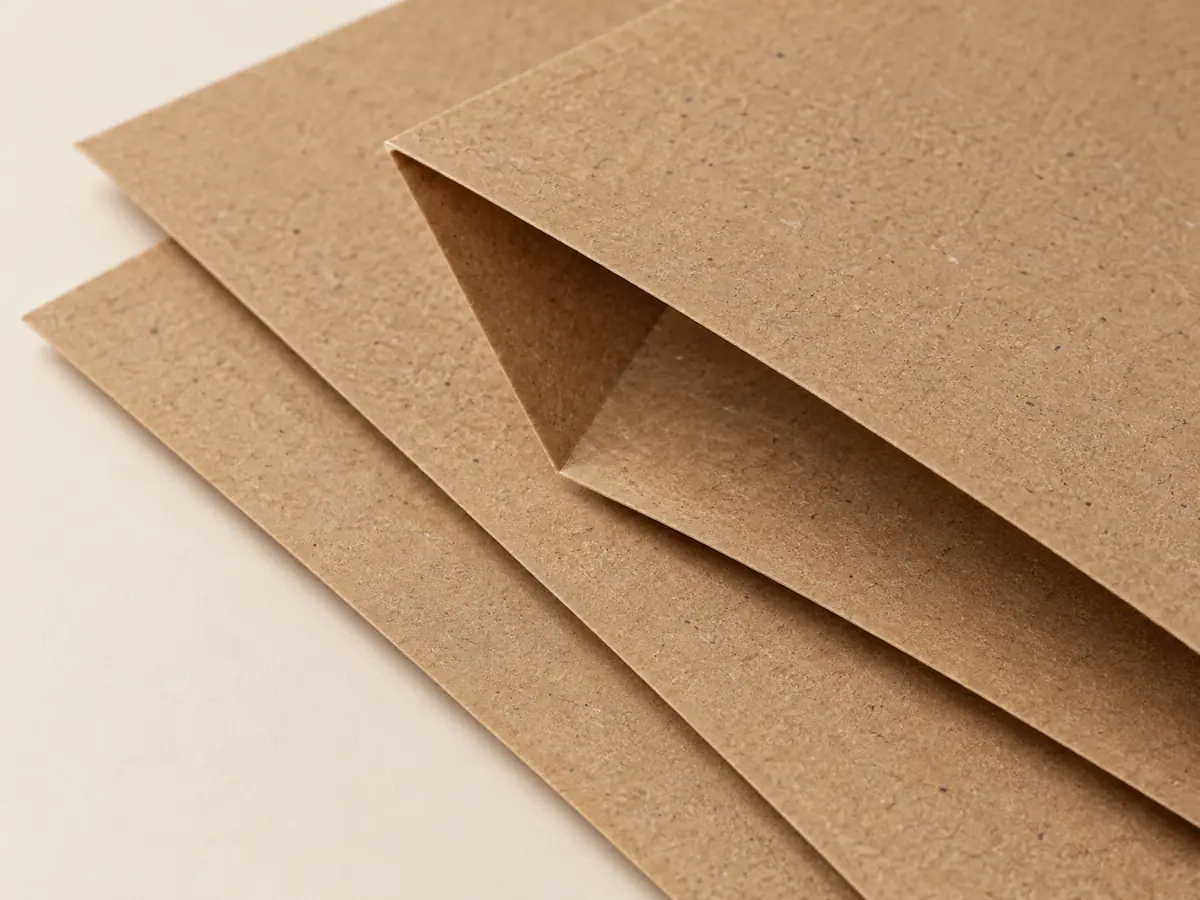
Thin natural brown kraft paperboard sheets with visible paper fibers

Warm color & visible texture

Natural kraft board

Brown paperboard makes the stock itself part of the design. It works well with simple graphics, generous space, and a natural-looking palette.

Common uses: Soap cartons, sleeves, gift packaging, and retail cartons with a kraft appearance.

Print & selection notes

The brown base changes the appearance of printed color. If a bright brand color or white graphic is important, discuss white ink or a white stock before approving the artwork.

Kraft describes a paper material, not a corrugated structure. Confirm the stock, thickness, and finish separately; brown color alone does not establish recycled content or certification.

Explore kraft carton options →
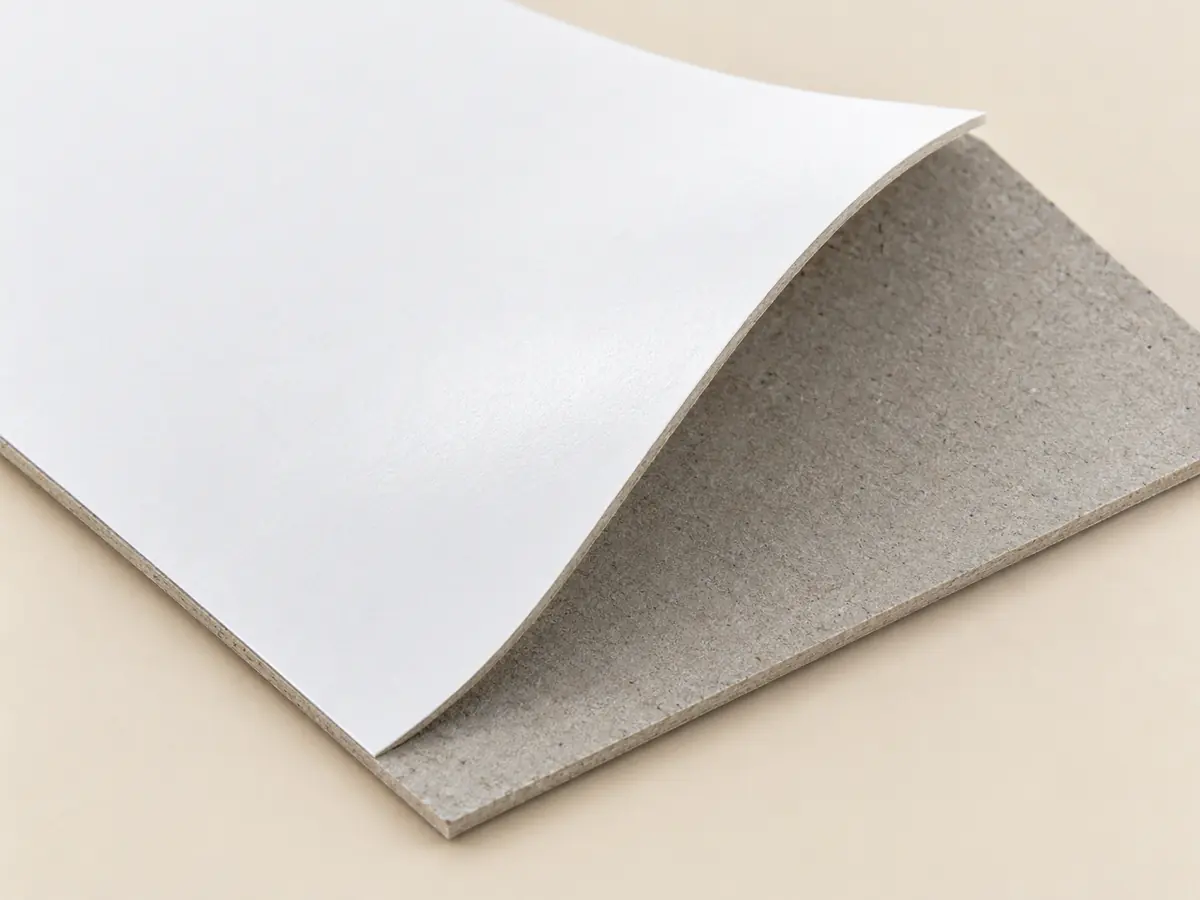
Duplex folding paperboard with a white printing face and gray reverse

White face, gray reverse

CCNB / duplex paperboard

Clay-coated newsback has a white printing face over a gray or brown-backed board. It offers a different inside appearance from all-white SBS.

Common uses: Retail cartons and sleeves where the exterior graphic matters more than a white interior.

Print & selection notes

Put the main graphics on the coated face. Review the reverse if customers will see the inside or if an interior message is planned.

Compare price and stiffness at the actual carton size. The same PT or GSM does not make duplex and SBS identical in appearance, rigidity, or print performance.

Compare carton materials →
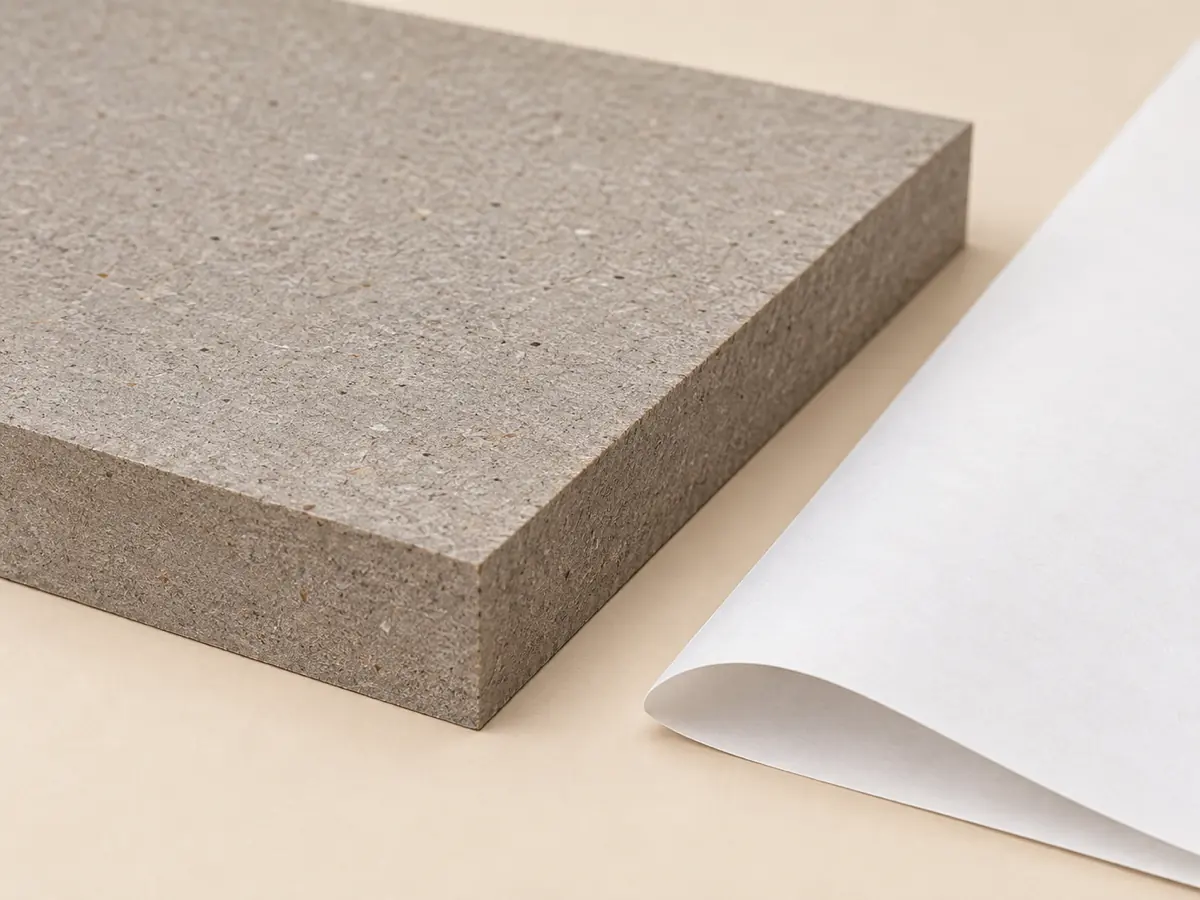
Thick solid grayboard beside a separate white paper wrapping sheet

Structure beneath the surface

Rigid grayboard & wrap

A rigid box gets its structure from a thick solid board core. A separate paper wrap carries the color, print, texture, and decorative finish.

Common uses: Magnetic presentation boxes, gift sets, jewelry packaging, and collapsible rigid boxes.

Print & selection notes

Plan foil, embossing, debossing, and surface finishes around the wrap and assembled box. The visible paper and structural core perform different jobs.

Discuss core thickness in millimeters. A 1.5 mm or 2.0 mm core is a starting reference, not the finished wall thickness; wrap, lining, box dimensions, and inserts also matter.

Explore magnetic rigid boxes →
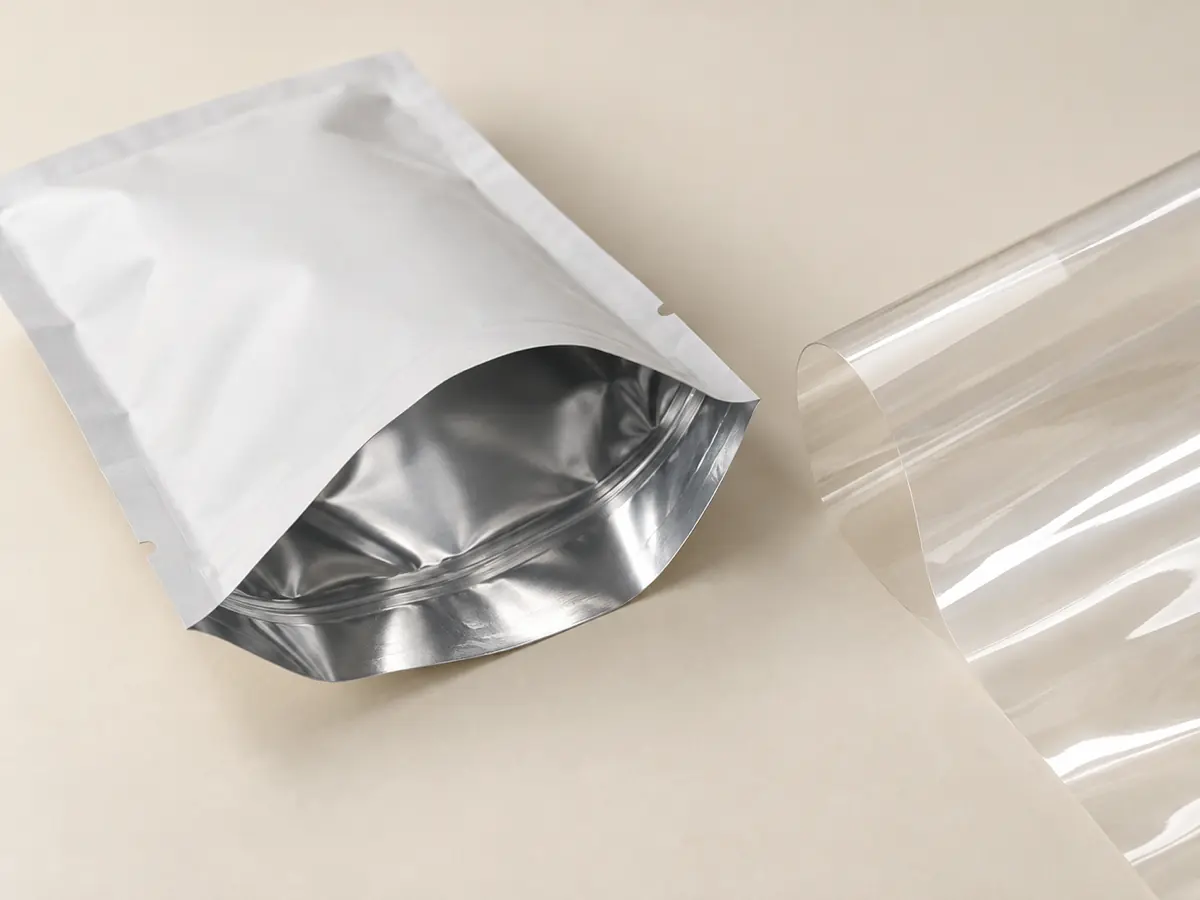
Flexible pouch material with a silver inner surface beside a transparent film strip

Barrier, sealing & shelf life

Flexible films & pouch layers

A pouch is a material system. Its outer layer, barrier layer, and sealant work together around the product and filling process.

Common uses: Custom Mylar bags, stand-up pouches, flat-bottom bags, coffee bags, and other flexible formats.

Print & selection notes

Matte, gloss, metallic effects, and clear windows depend on the film construction. A clear window changes the barrier area and should be specified with the product requirements.

Share the contents, fill weight, shelf-life target, and filling method. Thickness alone does not establish oxygen or moisture protection, food-contact suitability, or recyclability.

Explore custom Mylar bags →
Finish library

See the difference. Choose the effect.

Compare raised detail, metallic accents, and surface sheen, then choose the finish for your packaging.

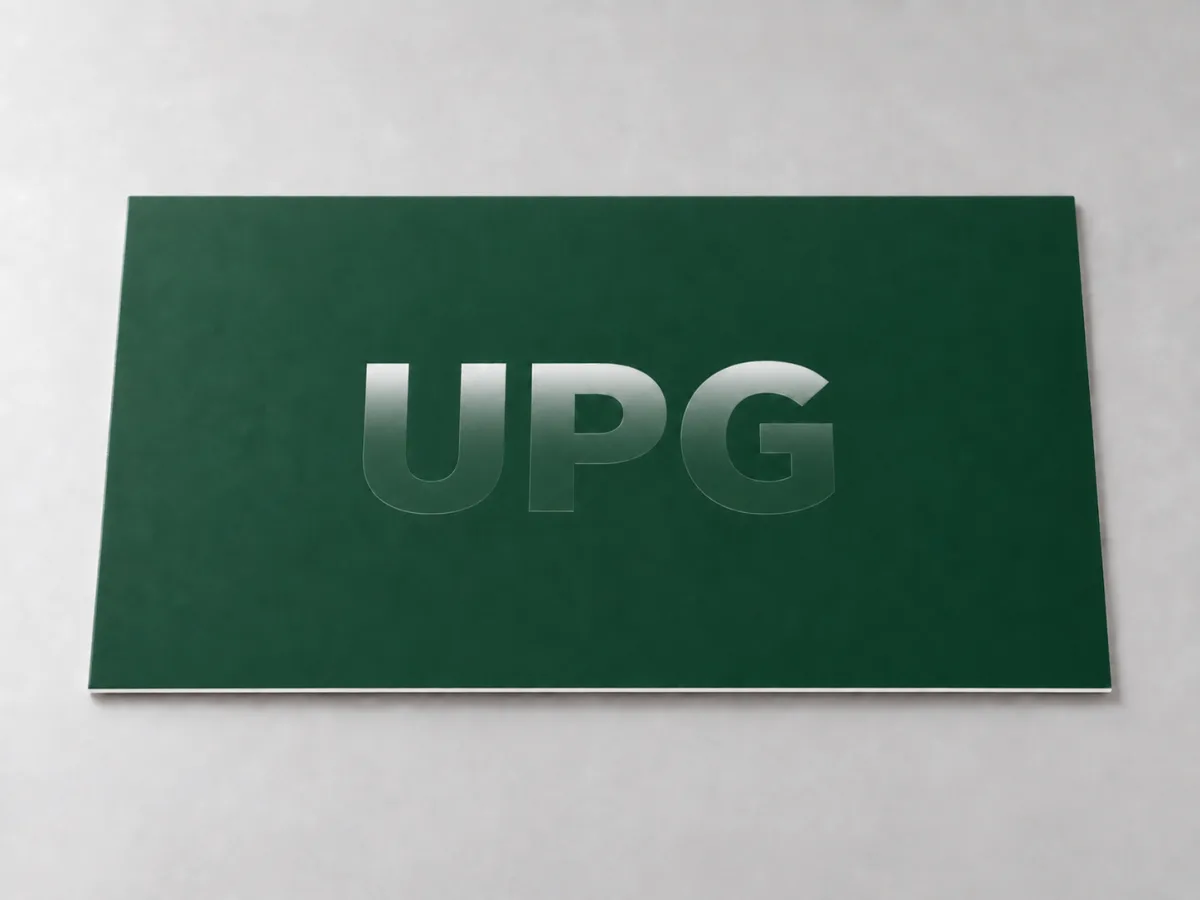
Flat UPG sample card with a selective glossy Spot UV pattern over a matte printed surface

Gloss in selected areas

Spot UV

A clear coating adds shine to a selected logo, pattern, or image. Over a matte surface, the contrast is visible as the box moves in the light.

Consider for: Brand marks on folding cartons, printed rigid-box wraps, and compatible printed mailer surfaces.

Artwork, cost & practical notes
Artwork
Supply the UV area as a separate named vector layer or spot-color mask aligned to the print artwork.
Cost factors
Coverage, registration, the base finish, and the extra coating pass affect the quote.
Before you choose
Standard spot UV is not raised embossing. Review fine gaps and fold positions; confirm adhesion to the selected ink, coating, or laminate.
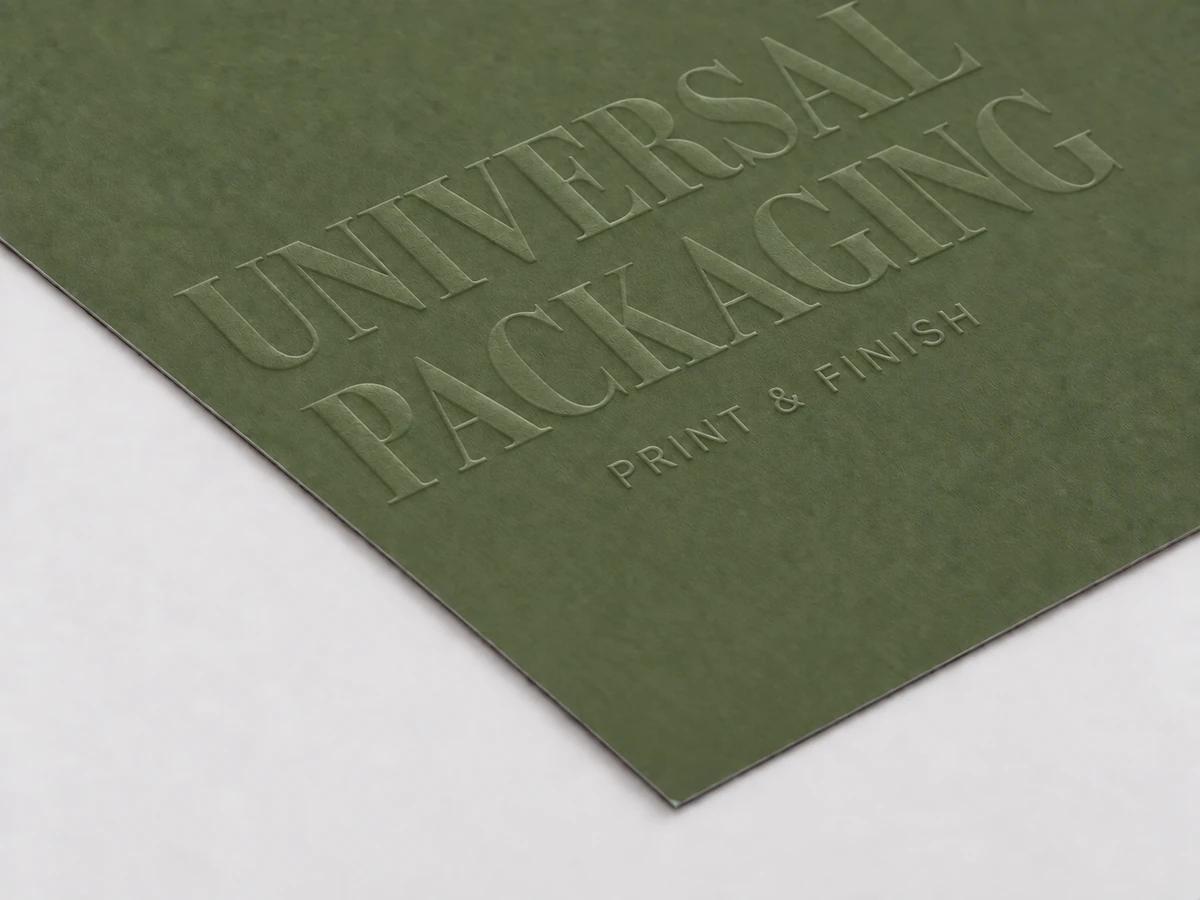
Angled close-up of shallow blind-embossed lettering on moss-green cardstock

Raised paper detail

Embossing

A shaped die raises the paper surface to create a detail you can see and feel. Blind embossing uses the paper itself, without ink or foil in that area.

Consider for: Logos and simple patterns on folding cartons and rigid-box wraps; mailer applications need the liner and construction reviewed first.

Artwork, cost & practical notes
Artwork
Use a separate vector layer. Keep small letters, narrow gaps, and fine strokes open enough for the selected stock and die.
Cost factors
Die tooling, design area, relief levels, and alignment with print or foil affect setup and production.
Before you choose
Embossing can leave a corresponding impression on the reverse. Check the inside appearance and keep critical detail clear of folds and glue areas.
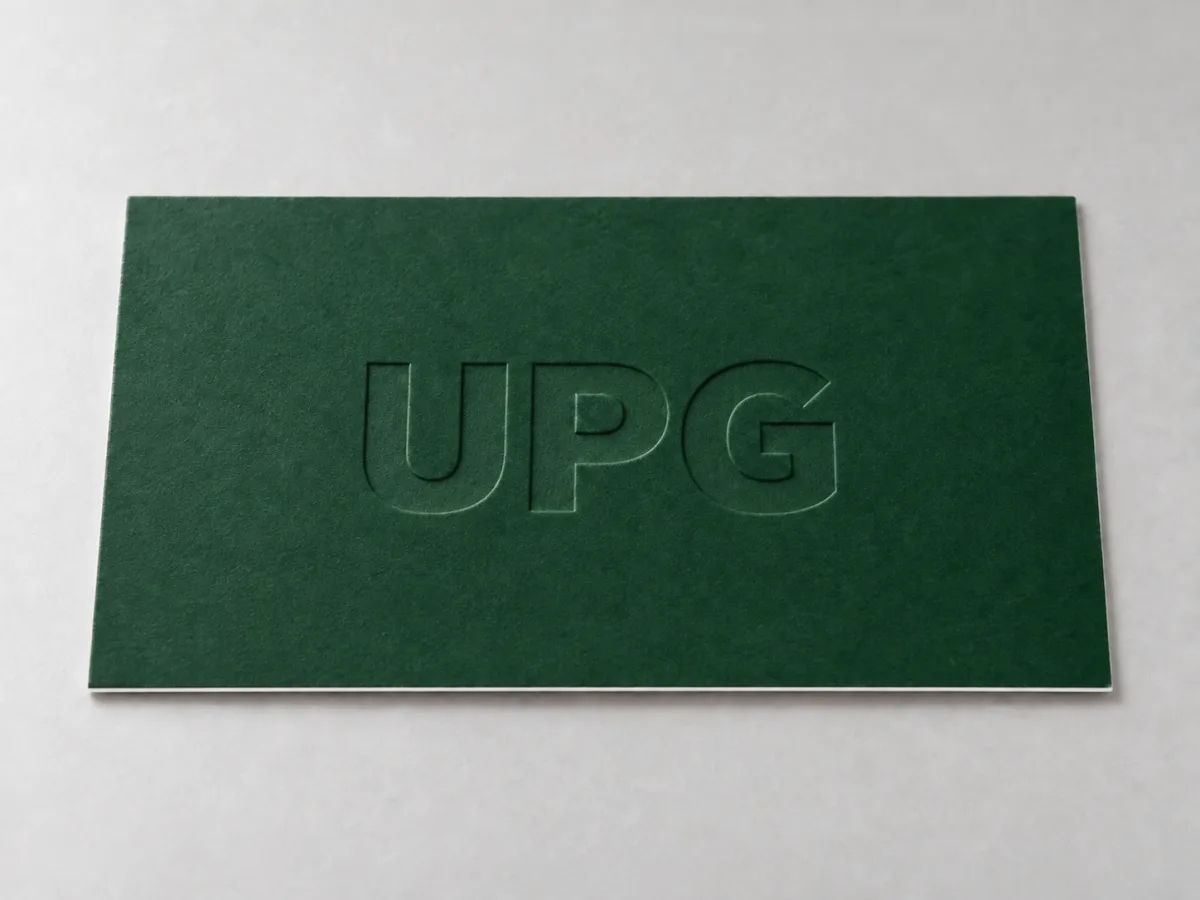
Flat UPG sample card with a recessed debossed detail pressed into the surface

Pressed-in detail

Debossing

Debossing presses a design below the surface. Shadows define the recessed mark, giving simple artwork a quiet, tactile character.

Consider for: Minimal logos on suitable carton stocks and paper wraps for presentation boxes.

Artwork, cost & practical notes
Artwork
Mark the deboss area on its own vector layer and show the intended position on the dieline.
Cost factors
Tooling, impression area, stock choice, and any print or foil registration affect the quote.
Before you choose
Depth depends on the substrate and construction. Very fine detail or a deep impression can distort the stock; review the intended result before production.
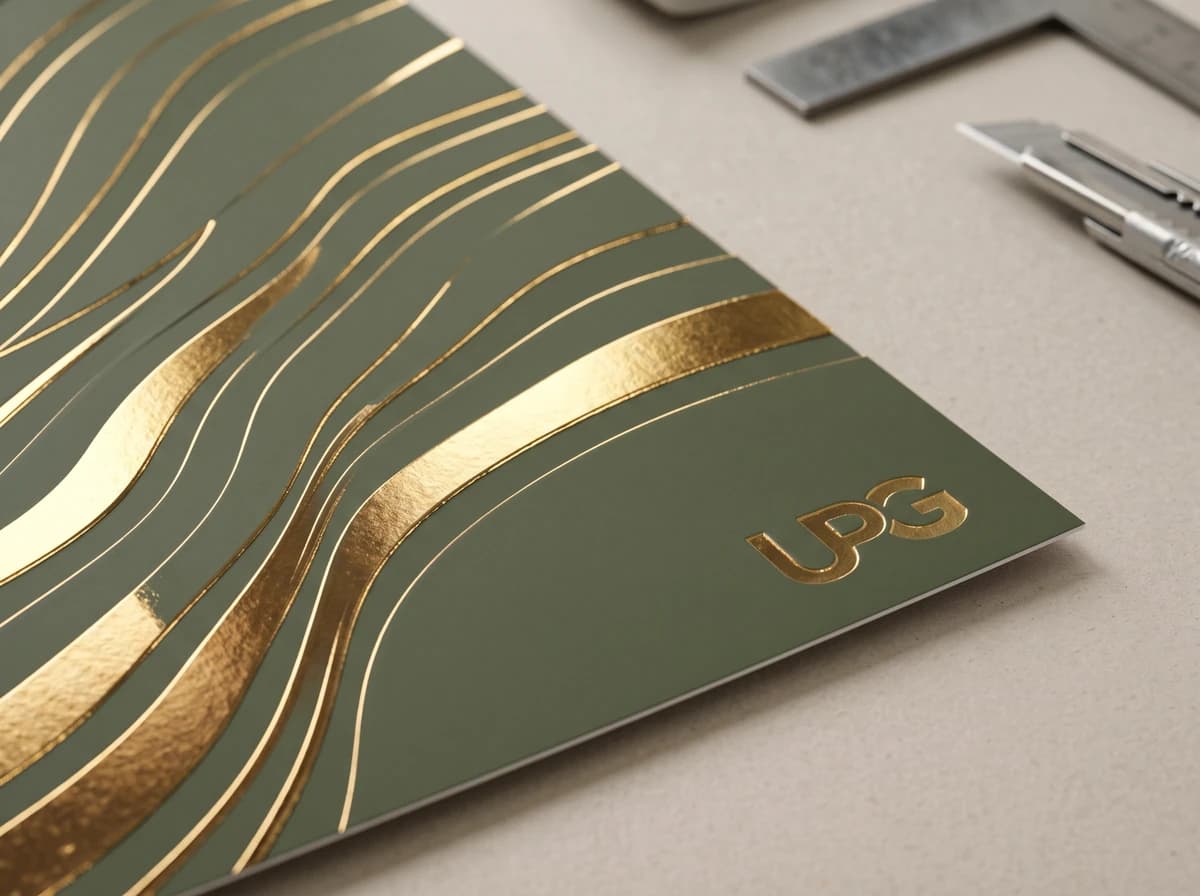
Gold foil linework and UPG mark on a green cardstock sample card on a beige table

Reflective metallic accents

Foil stamping

Foil transfers a decorative layer onto selected areas of the packaging. Metallic gold or silver can create reflections that ordinary CMYK ink cannot reproduce.

Consider for: Logos, borders, and small focal details on cartons and rigid wraps, with compatible mailer surfaces reviewed by project.

Artwork, cost & practical notes
Artwork
Separate each foil color into a named vector layer. Define solid shapes and leave enough space between small details.
Cost factors
Die size, foil coverage, foil colors, placements, and press passes influence pricing.
Before you choose
Foil is not automatically embossed. Combining foil with relief is a separate specification, with alignment and tooling to review.
Explore foil colors →
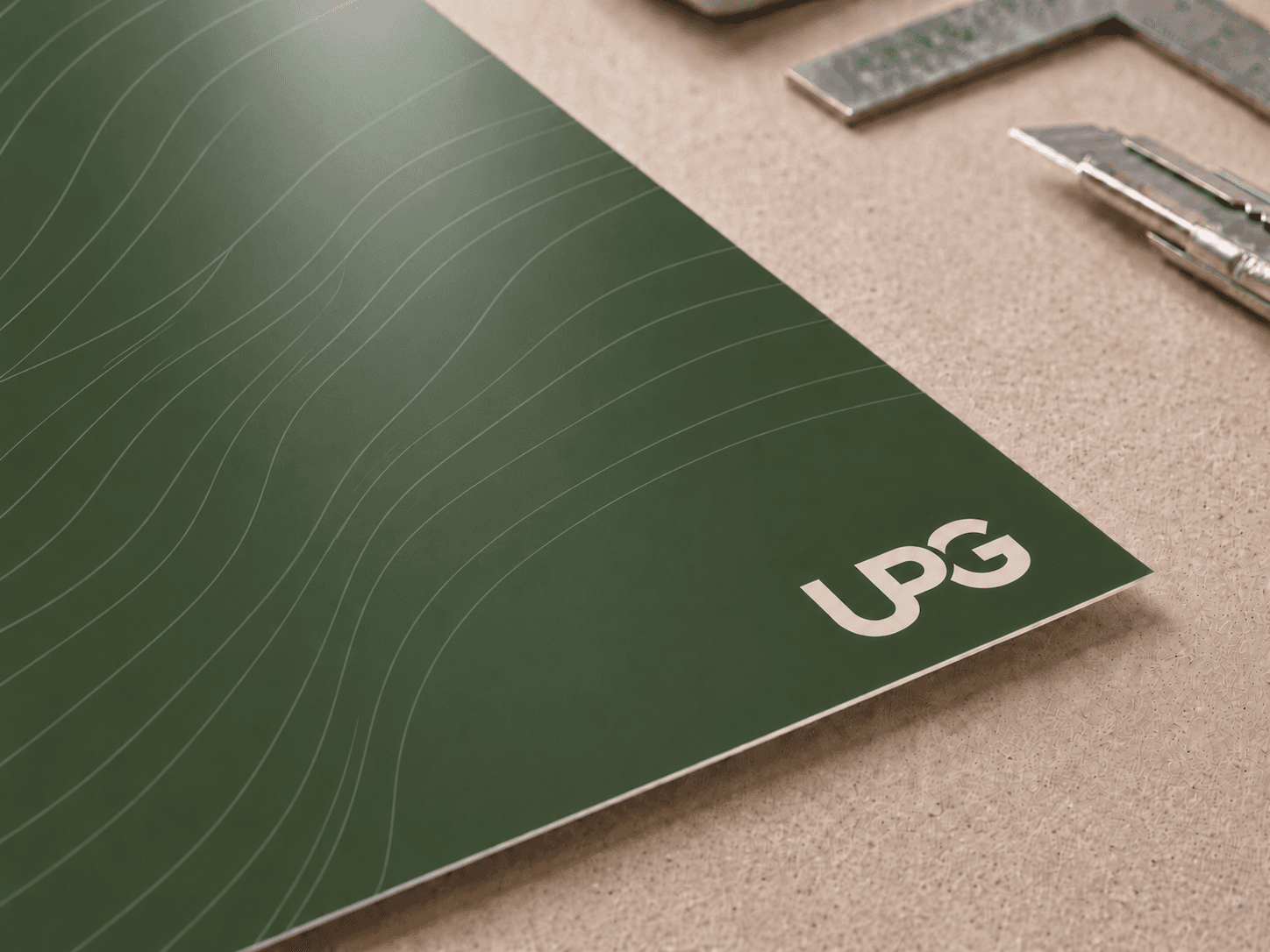
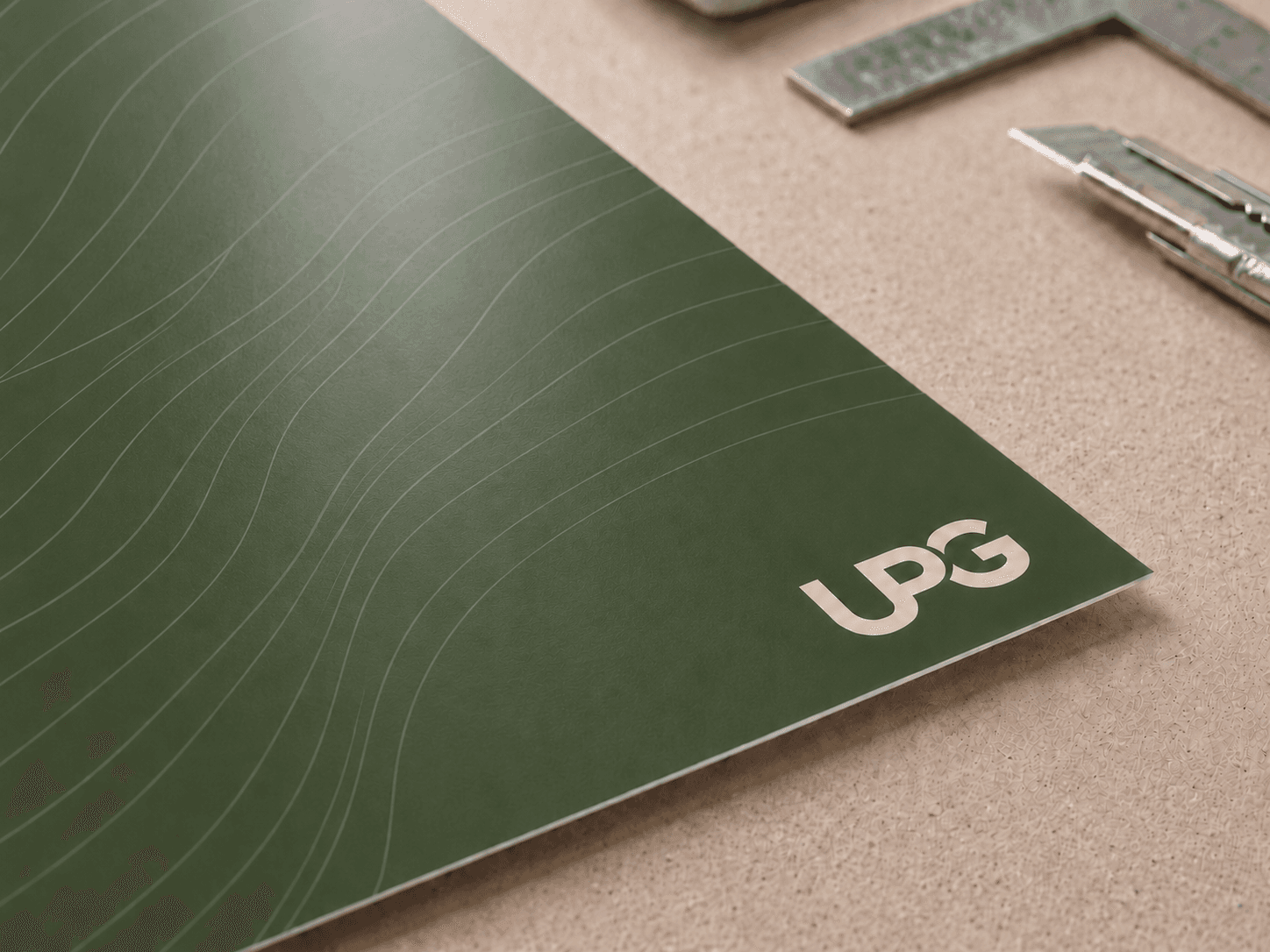
Green UPG cardstock sample with a low-sheen matte laminated surface and cream printed linework

Low sheen, smooth surface

Matte lamination

A thin matte film is bonded to the printed sheet. The muted reflection helps typography and simple color fields stay the focus.

Consider for: Retail cartons, rigid-box wraps, and compatible printed mailers with a subdued surface finish.

Artwork, cost & practical notes
Artwork
Specify the laminated face and any foil or spot UV that will be applied over it.
Cost factors
Film type, sheet coverage, and additional finishing steps affect the quote.
Before you choose
Dark matte surfaces may show rub marks. Discuss a scuff-resistant grade for handling-intensive packs; matte does not mean scratch-proof.
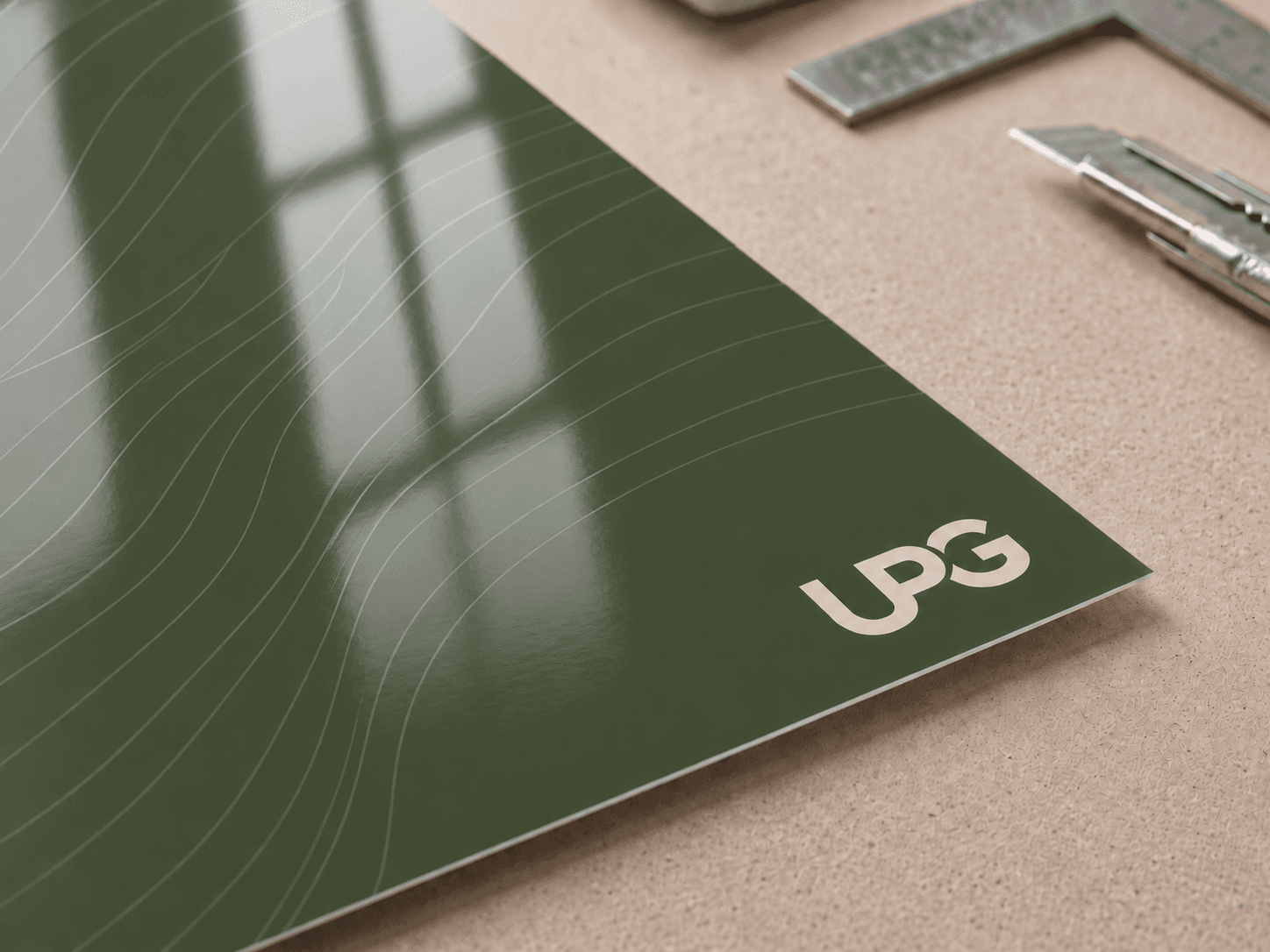
Green UPG cardstock sample with a glossy laminated surface reflecting window light

All-over reflective finish

Gloss lamination

A clear glossy film adds a reflective surface across the printed sheet. It can make color and photographic artwork look more vivid.

Consider for: Image-led retail cartons, colorful gift packaging, and compatible printed mailer surfaces.

Artwork, cost & practical notes
Artwork
Identify the outside and inside faces separately if both need finishing.
Cost factors
Film specification, coverage, and any later foil or coating operations affect pricing.
Before you choose
Glare can compete with small text. Check readability under retail lighting, and review crease behavior on the chosen board.
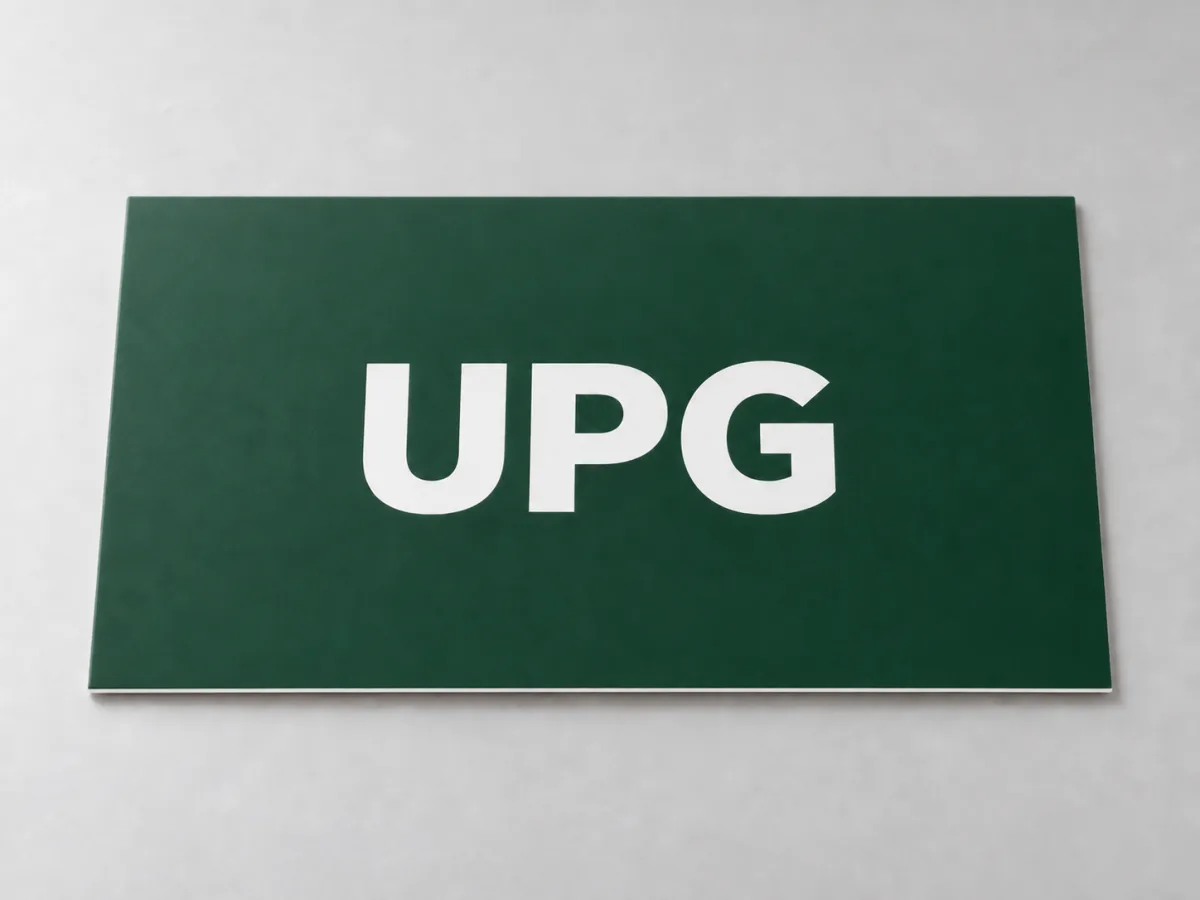
Flat UPG sample card with a low-sheen soft-touch surface

A smooth, velvety feel

Soft-touch finish

Soft-touch treatments add a tactile, low-sheen surface. Soft-touch coating and soft-touch lamination are different processes that can create a similar feel.

Consider for: Beauty cartons, gift packaging, and presentation-box wraps where touch is part of the experience.

Artwork, cost & practical notes
Artwork
Specify coating or film lamination with the quote and identify any overprinted or decorated areas.
Cost factors
The chosen process, surface area, and compatibility with later finishing affect the cost.
Before you choose
A screen cannot show the feel. Review a physical finish reference when touch matters, and confirm scuff performance and foil or UV compatibility.
Flat UPG sample card with an all-over UV coating and clear gloss reflection

Clear coating across a panel

Flood UV coating

A liquid coating is cured with ultraviolet light over a broad surface. Gloss UV adds an overall sheen; spot UV limits that coating to selected details.

Consider for: Printed cartons and compatible paper surfaces where an all-over coated finish is wanted.

Artwork, cost & practical notes
Artwork
Identify coated panels and areas that must remain suitable for gluing, labeling, or other operations.
Cost factors
Coating formulation, coverage, application method, and additional operations affect the quote.
Before you choose
UV coating is not a laminated film and does not make a package waterproof. Confirm adhesion, fold behavior, and compatibility with the final use.
Flat UPG sample card with an aqueous coating in a soft satin sheen

Water-based surface finish

Aqueous coating

Aqueous coating is a water-based finish applied across the printed surface. It can be specified in matte, satin, or gloss to set the desired sheen.

Consider for: Printed folding cartons, rigid-box wraps, and compatible paper-based packaging surfaces after the production route is reviewed.

Artwork, cost & practical notes
Artwork
Identify the finished face and the intended sheen, then mark areas reserved for gluing, labels, or later decoration.
Cost factors
Coverage, sheen, application method, and any additional finishing operations affect the quote.
Before you choose
Coating grades differ in sheen and handling performance. Confirm adhesion, crease behavior, and compatibility with any later foil or spot UV on the selected stock.
Green UPG cardstock sample with a matte varnish finish, cream printed logo, and fine curved linework

Subtle, low-glare surface finish

Matte varnish

A transparent matte varnish is applied through the print process to soften reflections on the printed surface. Gloss and satin varnishes are also available when a different sheen is preferred.

Consider for: Cartons, paper wraps, and compatible paper packaging where the print process and chosen stock support the requested finish.

Artwork, cost & practical notes
Artwork
State the varnish sheen and provide separate vector areas when a pattern or mixed-sheen effect is needed.
Cost factors
Coverage, varnish specification, print passes, and any registration to artwork affect the quote.
Before you choose
A varnished surface is not a laminated film. Review drying, rub resistance, and compatibility with folds, glue areas, and any later decoration.
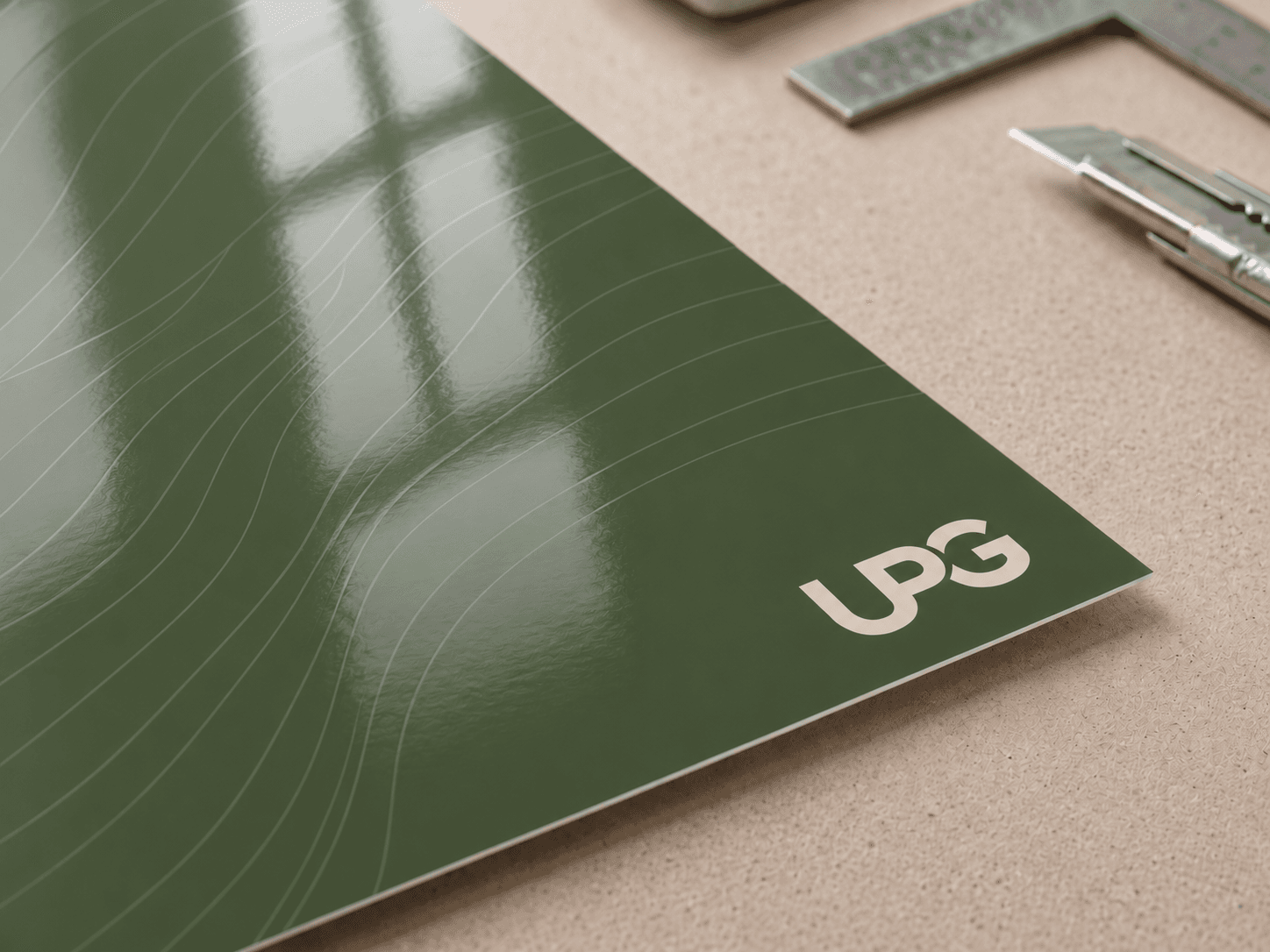
Green UPG cardstock sample with a gloss varnish finish reflecting window light across the printed surface

Clear, reflective printed finish

Gloss varnish

A clear gloss varnish is applied through the print process to add shine to printed artwork. It can cover the printed surface or highlight selected areas.

Consider for: Printed cartons, paper wraps, and compatible packaging surfaces where a reflective finish suits the design.

Artwork, cost & practical notes
Artwork
Specify full coverage or mark selected varnish areas in a separate vector layer, keeping glue areas clear.
Cost factors
Coverage, varnish specification, print passes, and alignment with the artwork affect the quote.
Before you choose
Gloss varnish is a liquid-applied finish, not a laminated film. Review drying, rub resistance, and compatibility with folds and later decoration.

Foil colors

Choose a foil color for your packaging.

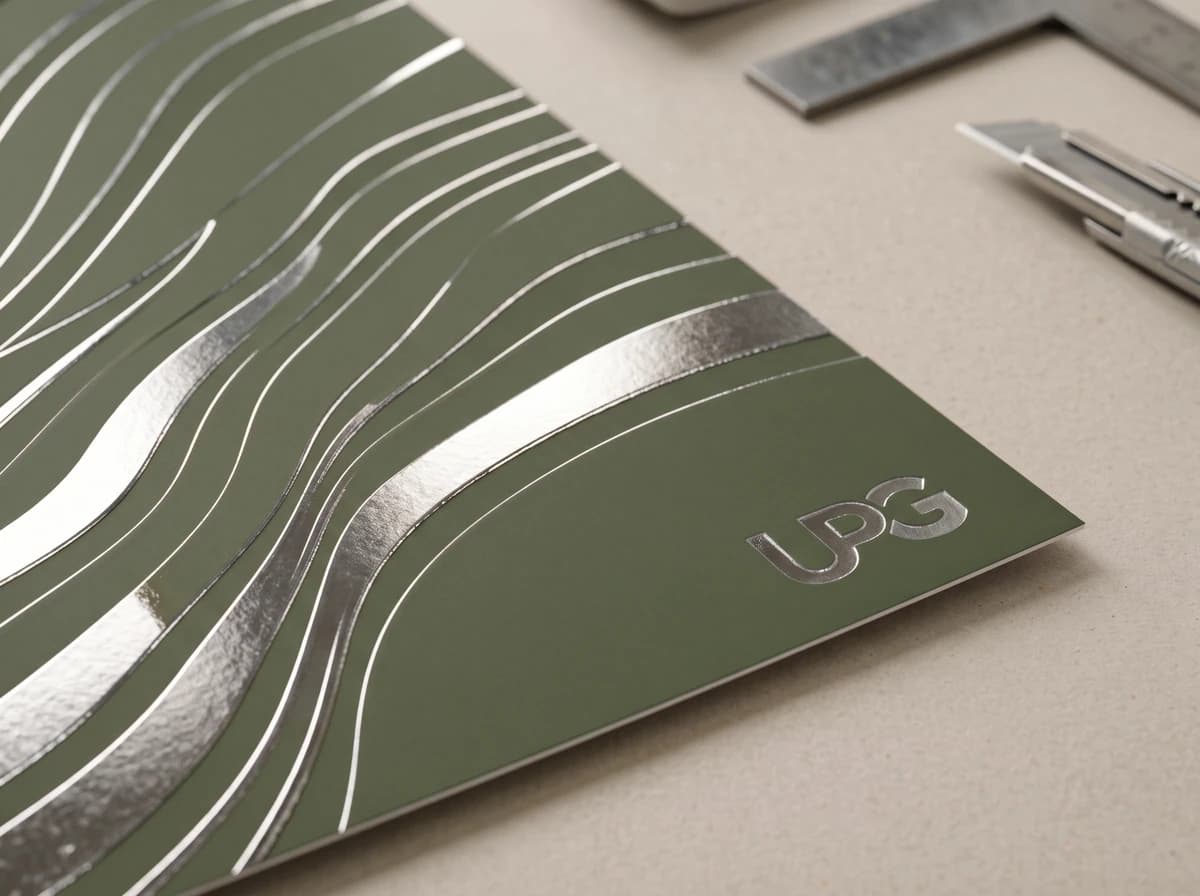
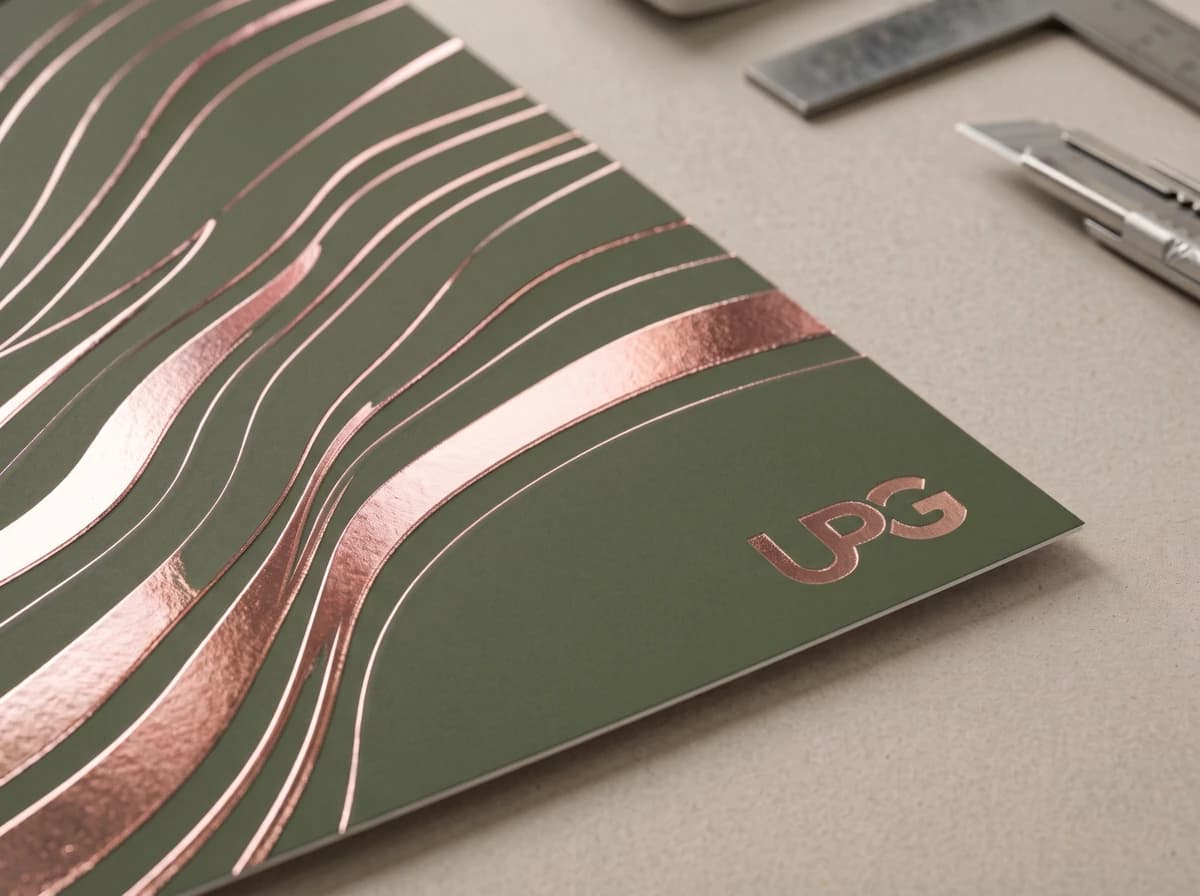
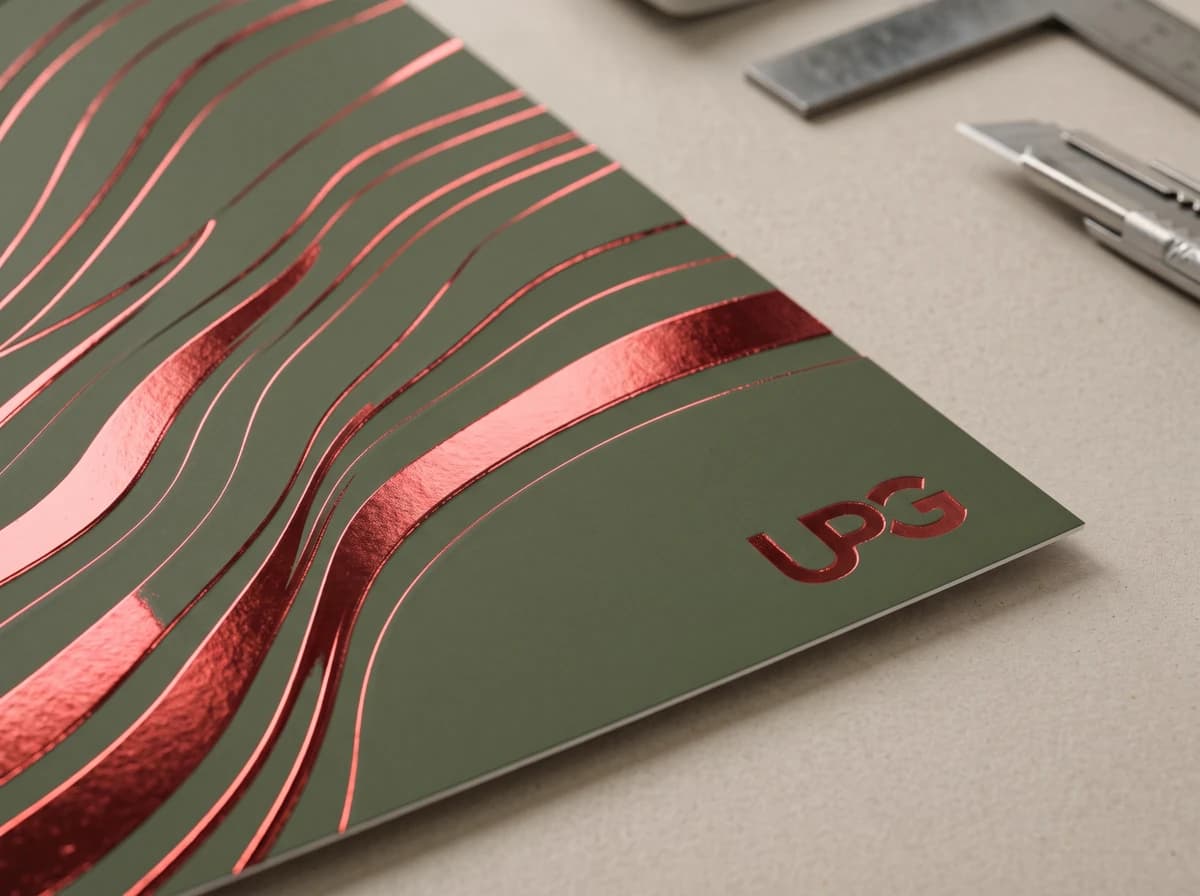
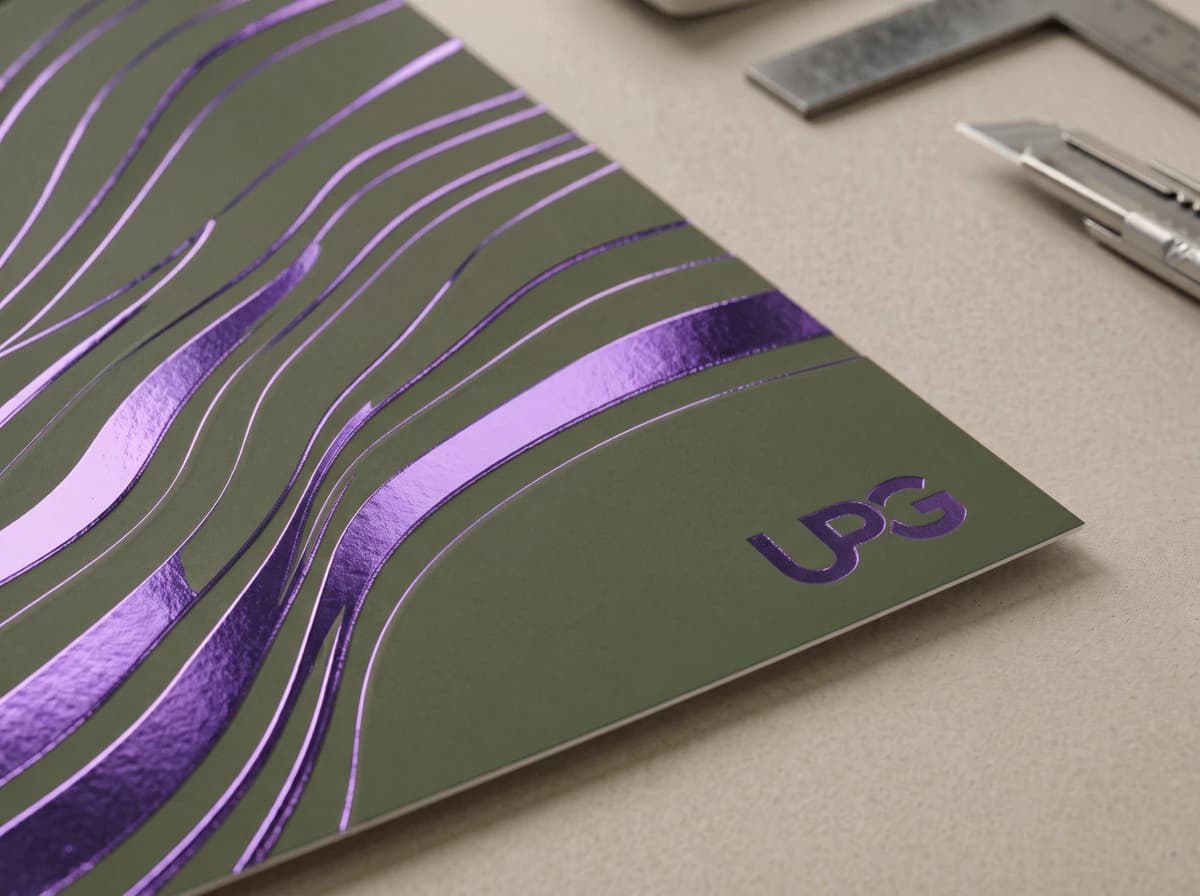
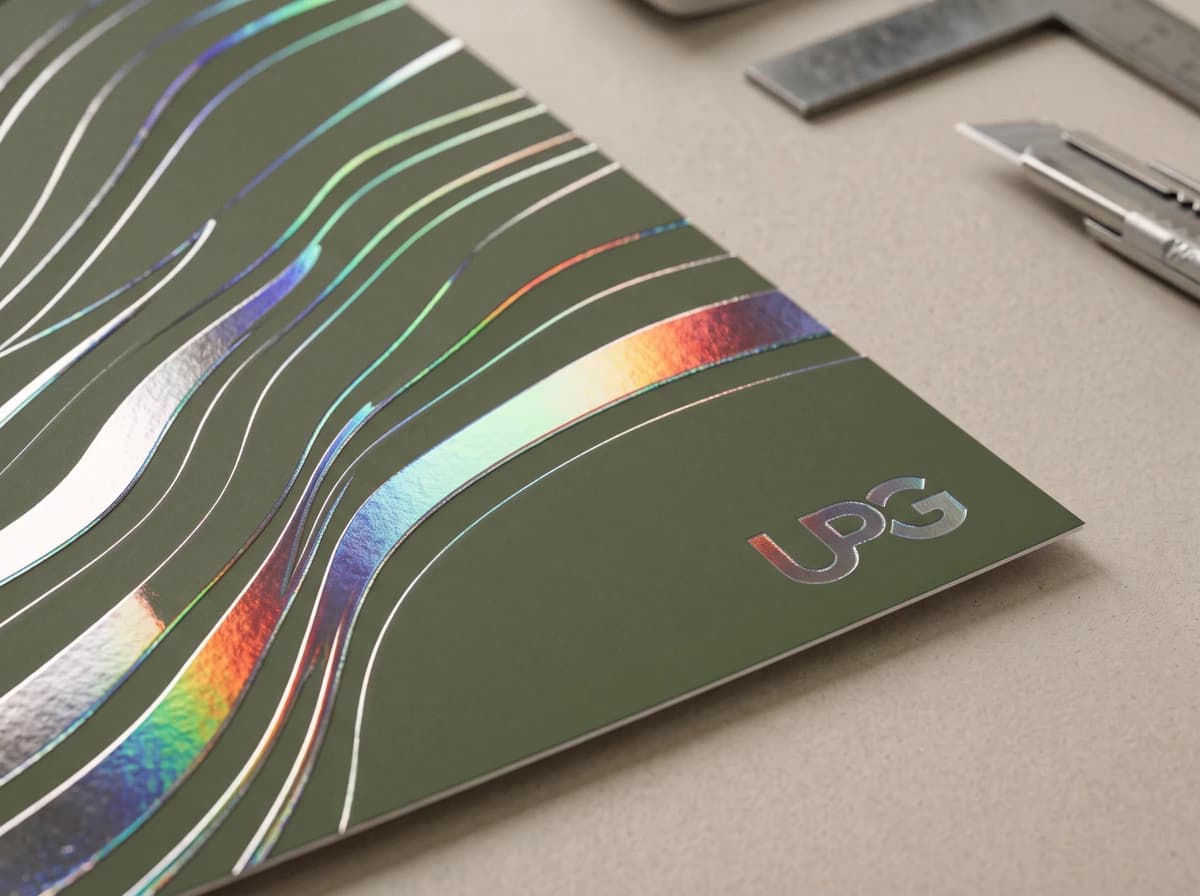
Compare metallic, colored, and holographic foils on green cardstock. Share your preferred color with your artwork so we can review the foil placement, coverage, and stock together.

Gold foil linework and UPG mark on a green cardstock sample card on a beige table
Gold foil
Silver foil linework and UPG mark on a green cardstock sample card on a beige table
Silver foil
Rose gold foil linework and UPG mark on a green cardstock sample card on a beige table
Rose gold foil
Red foil linework and UPG mark on a green cardstock sample card on a beige table
Red foil
Purple foil linework and UPG mark on a green cardstock sample card on a beige table
Purple foil
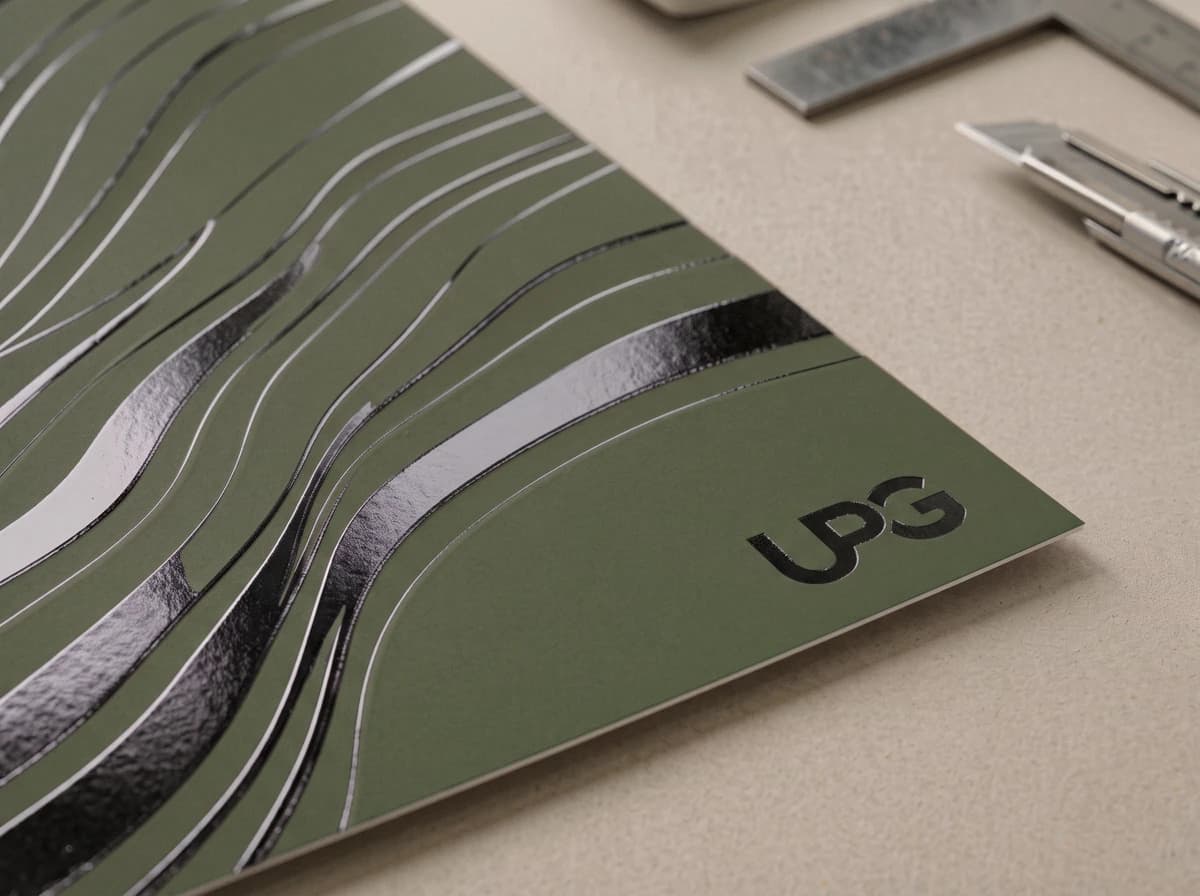
Black foil linework and UPG mark on a green cardstock sample card on a beige table
Black foil
Holographic foil linework and UPG mark on a green cardstock sample card on a beige table
Holographic foil

Choose the stock and finish together.

Surface treatments affect printing, folding, gluing, and handling. We review the combination for your packaging and confirm the specification in your quote. Share a reference for the effect you want; you do not need to choose every technical detail before contacting us.

Read the packaging finishes guide →
Paperboard

Compare paperboard thickness.

PT describes thickness. GSM describes weight per area. Choose the board family first, then compare a caliper that suits the carton dimensions and contents.

8 PT

0.2032 mm

GSM reference: 177

Light printed cards, tags, insert cards, or sleeves

10 PT

0.2540 mm

GSM reference: 195–202

Light printed cards, tags, insert cards, or sleeves

12 PT

0.3048 mm

GSM reference: 227–250

Light cartons or sleeves

14 PT

0.3556 mm

GSM reference: 255–275

Light cartons or sleeves

16 PT

0.4064 mm

GSM reference: 284–300

Retail product cartons

18 PT

0.4572 mm

GSM reference: 311–350

Retail product cartons

20 PT

0.5080 mm

GSM reference: 335–345

Thicker folding board; review creases and structure

24 PT

0.6096 mm

GSM reference: 396–407

Thicker folding board; review creases and structure

28 PT

0.7112 mm

GSM reference: 462–527

Thicker folding board; review creases and structure

One paperboard point is 0.001 inch, or 0.0254 mm. GSM varies by board grade; the table uses published stock examples from Sappi Spectro C1S, Smurfit Westrock PrintKote, and the PakFactory nominal stock guide. Confirm the selected stock with your quote.

Read the paperboard thickness guide →
Corrugated board

Board construction and flute size.

Corrugated board combines flat liner sheets with a fluted medium. Formation tells you the layer count; flute profile affects board depth, face quality, and cushioning.

Liner and flute layers in corrugated boardA wavy fluted medium joined to the outer and inner flat liners forms a single-wall board.Outer linerFluted mediumInner liner

A single-wall board uses an outer liner, fluted medium, and inner liner.

1 liner + 1 flute

Single face

2 liners + 1 flute

Single wall

3 liners + 2 flutes

Double wall

4 liners + 3 flutes

Triple wall

A larger flute is not the same thing as a double wall. Choose formation and flute with the complete pack, its dimensions, fragility, handling, and transit conditions.

Common flute profiles, from thinner to deeper

approx. 0.8 mm

F flute

Compact retail boxes and fine print details.

approx. 1.6 mm

E flute

Printed mailers, retail packaging, and inserts.

approx. 3.2 mm

B flute

Corrugated packs and displays needing more depth than E flute.

approx. 4.0 mm

C flute

Shipping packs where cushioning and stacking need review.

approx. 4.8 mm

A flute

Cushioning around fragile products, with room for a deeper wall.

Dimensions are approximate reference values, rounded from published flute-depth tables. They are not universal calipers or load ratings.

Beyond the surface

Plan the view, the fit, and the opening.

Windows and inserts change how customers see and handle the product. Specify them with the material and structure, before the artwork is finalized.

Windows & cutouts

A die-cut opening reveals part of the product. A film patch can cover a carton window; a clear area in a pouch is part of its film construction. These are different specifications.

  • Choose the window position around the product and insert.
  • Keep enough material around edges, folds, and glue panels.
  • Review visibility alongside protection and barrier requirements.
Explore carton options →

Inserts & interior fit

An insert positions the product and helps control movement. Paperboard and corrugated inserts can divide sets or hold an item within a mailer or presentation box.

  • Share the product dimensions, weight, and fragile areas.
  • Allow space for easy removal as well as a secure fit.
  • Review the complete pack for transit; a snug fit alone is not a shipping test.
Explore mailers with inserts →
For rigid boxes and pouches: compare core and wrap for presentation boxes, or review the film structure for flexible packaging. Choose the decorative surface after the protective structure is clear.
Buyer questions

The details worth getting right.

Clear answers before you choose a stock, prepare the artwork, or compare quotes.

Can a corrugated mailer have foil, spot UV, or embossing?

The surface and production route matter. A printed sheet laminated to corrugated board can support different decoration options from a directly printed kraft liner. Share the desired effect with the mailer specification so the liner, flute, folds, and finishing sequence can be reviewed together.

Is spot UV the same as embossing or raised UV?

No. Standard spot UV creates selective gloss, while embossing reshapes the paper to create relief. Raised UV uses a thicker deposited coating and is a separate process; ask for it specifically if a raised coating is the intended result.

Does C1S mean the finished box will be glossy?

No. C1S describes paperboard coated on one face for printing. The final sheen depends on the additional coating or lamination. A C1S carton can have a matte, gloss, or other specified finish.

Which artwork files are needed for foil, UV, embossing, or debossing?

Keep the print artwork, dieline, and each decorative process on separately named layers. Use vector shapes for the finish areas, outline type where required, and align every layer to the same dieline. Review placement and separation in the design proof file before approval.

Do special finishes change the packaging price?

They can add tooling, material, setup, or another production operation. The size and number of decorated areas, colors, registration, quantity, and stock all matter. Request the base option and preferred finish together for a meaningful comparison; there is no universal percentage uplift.

Does a thicker board always give better protection?

No. Compare the complete pack: product weight and fragility, box dimensions, board grade, structure, insert fit, and shipping conditions. Paperboard PT describes thickness, GSM describes weight per area, and corrugated flute describes a profile. None is a complete protection rating on its own.

Prepare your packaging artwork →
Get a custom quote

Need help selecting the material and finish?

Share the product, dimensions, quantity, target look, and intended use. We will review a proposed structure and material combination for the project.